
How the Summer of 2026 Beat Up Central Texas Air Conditioners — and What a Professional Tune-Up Actually Fixes
By the Air & Plumbing Today Team — Serving San Antonio, Lakeway, Austin & surrounding Central Texas communities. Family-owned since 2012.
If you lived through the Summer of 2026 in San Antonio or Austin, you already know: this was not a “normal hot Texas summer.” It was a grind. After a relatively milder start to the season, a stubborn heat dome locked in over South-Central Texas. August delivered stretch after stretch of 100-degree days — San Antonio spent nearly the entire month at or above the century mark. Then September refused to let go. Triple-digit heat kept stacking up well into the month, with heat-index readings that made afternoon errands feel like a dare.
Your air conditioner did not get a day off. For weeks on end it ran almost around the clock just to hold the thermostat where your family wanted it. That kind of duty cycle is exactly how good systems turn into expensive emergencies in October and November — unless you give the unit a real fall tune-up before the next stretch of heat (and the first cool nights) arrives.
This is the Fall AC System Tune-Up Checklist we use at Air & Plumbing Today. Read it, then call us. There is a special on AC tune-ups right now on our offers page. Let our familia help your familia.
Why Summer 2026 Was So Hard on AC Systems
Central Texas summers always work an air conditioner hard. Summer 2026 added extra punishment: long runs of 100°F+ highs, high humidity that pushed heat-index values well over 105°F, nights that barely cooled off, and systems that never got a chance to rest.
When an AC runs 24/7 in that kind of heat, every moving part, every electrical connection, and every coil is under constant load. Heat expands metal. Vibration loosens screws. Dust and cottonwood fluff bake onto outdoor coils. Condensate never stops dripping. Capacitors cook. Motors run hot. Refrigerant charge that was “close enough” in April becomes a real problem in August.
That is why fall — right now — is the smartest time to service the cooling system. The heat is finally starting to ease, technicians have more scheduling flexibility than they did in July, and small problems can still be fixed before they become no-cool emergencies on the next 98-degree afternoon.
What Wears Out When an AC Works Around the Clock
Here is what takes the beating when a system in San Antonio or Austin is forced to run nearly nonstop all summer.
Electrical parts that fail first
- Run capacitors and start capacitors. Heat is the number-one killer of capacitors. A weak capacitor makes the compressor or fan motor struggle, draw extra amps, and eventually fail.
- Contactors. The electrical switch that sends power to the outdoor unit pits and burns from constant cycling. A worn contactor is a classic “it just died overnight” failure.
- Loose wiring and lugs. Heat expansion and vibration loosen connections at the disconnect, contactor, and control board. Loose connections create heat, arcing, and melted terminals.
- Control boards and relays. Boards live in a hot attic or garage. Constant operation plus Texas heat shortens their life.
- Fuses and breakers that nuisance-trip. High amp draw from dirty coils or a weak capacitor will trip protection and look like a “power problem” when the real issue is the AC.
Motors, fans, and mechanical wear
- Condenser fan motor. It sits outside in 100-degree air and runs for hours. Bearings dry out, windings overheat, and the fan starts humming, squealing, or stalling.
- Indoor blower motor. A dirty filter or restricted return makes the blower work harder all summer. ECM motors and older PSC motors both suffer.
- Fan blades and blower wheels. Dirt unbalances the wheel, which shakes the motor and shortens bearing life.
- Belts on older systems. Heat and constant duty crack and stretch them.
Compressor and refrigerant
- Compressor stress. The compressor is the most expensive part of the outdoor unit. Low refrigerant, dirty coils, or a failing capacitor force it to run hotter and longer. That is how a $30 part turns into a compressor replacement.
- Refrigerant leaks. Vibration and age open tiny leaks at valves, coils, and flare fittings. A system that is even a little low works much harder in 100-degree weather.
- Line-set insulation. UV and heat cook the foam on the suction line. Bare copper picks up attic heat and steals cooling capacity.
Airflow, coils, and water
- Outdoor condenser coil. Grass clippings, dust, pollen, and cottonwood bake onto the fins. A dirty coil cannot reject heat, so pressures climb and the compressor overheats.
- Indoor evaporator coil. A dirty filter or neglected coil ices up, then dumps water. Restricted airflow is one of the most common late-summer failures.
- Clogged condensate drain lines and pans. Weeks of continuous dehumidifying grow algae and sludge. The pan overflows, the float switch shuts the system off, or water stains the ceiling.
- Dirty air filters. The cheapest part of the system and the one most often ignored. A packed filter starves the coil of air.
- Duct leaks and crushed flex. Attic heat in Texas is brutal. Leaky or poorly supported ducts dump cold air into the attic and make the unit run even longer.
Controls and comfort parts
- Thermostats and sensors. A thermostat that is off by a couple of degrees will keep the system running longer than it should.
- Safety switches. Float switches, high-pressure switches, and limit switches take a beating. If they fail, you either get no cooling or a flooded closet.
- Indoor air quality components. UV lights, media filters, and related accessories get ignored all summer and then underperform when you need them.
None of this is theoretical. These are the parts our technicians replaced all over San Antonio, Lakeway, and Austin after the heat of 2026. A fall tune-up is how you find the weak part while it is still a $20–$200 fix instead of a Saturday-night no-cool call.
The Fall AC Tune-Up Checklist: What Our HVAC Technician Will Do
A real tune-up is not “change the filter and spray the coil with a garden hose.” At Air & Plumbing Today, a professional AC tune-up is a systematic inspection, cleaning, measurement, and adjustment that restores the system as close as possible to factory performance.
1. Talk with you and look at the whole house
- Ask how the system behaved during the summer: hot rooms, short cycling, odd noises, water leaks, rising electric bills.
- Note the age, brand, model, and service history of the equipment.
- Look at thermostat settings, filter size, and return-air access.
- Check the area around the outdoor unit for debris, fencing, and plants that choke airflow.
2. Indoor air handler / furnace section
- Inspect and replace or clean the air filter. Recommend the right MERV rating so you get cleaner air without starving the coil.
- Open the air handler and inspect the evaporator coil for dirt, biological growth, and icing evidence.
- Clean the evaporator coil when it is accessible and dirty.
- Inspect and clean the blower wheel and housing.
- Check the blower motor: amp draw, capacitor (if equipped), mounting, and unusual noise or heat.
- Lubricate motors and moving parts that are designed to be oiled.
- Clear the condensate drain line, trap, and pan. Flush algae, verify flow, and test the float/safety switch.
- Treat the drain as needed to slow the next algae bloom.
- Inspect the drain pan for rust, standing water, and improper pitch.
- Check the cabinet, door seals, and filter rack so unfiltered air is not bypassing the coil.
- Inspect visible supply and return connections at the unit for leaks and missing insulation.
- On dual-fuel / gas systems, visually inspect the heat exchanger area and heating components so the same visit sets you up for cooler nights.
3. Electrical and controls (indoor and outdoor)
- Measure incoming voltage at the disconnect and at the unit.
- Inspect the disconnect, fuses, and breaker for heat damage.
- Tighten electrical connections at the contactor, capacitors, control board, and motors.
- Inspect wiring for brittle insulation, burned terminals, and rodent damage.
- Test capacitors with a meter. A capacitor can look fine and still be out of spec.
- Inspect and test the contactor for pitting and weak pull-in.
- Test safety controls: high-pressure, low-pressure (when equipped), float switch, and limit devices.
- Verify the thermostat is communicating correctly, calibrated, and programmed for the season.
- Clean thermostat sensors and outdoor sensors when present.
- Confirm control-board sequencing and check stored fault codes on communicating systems.
4. Outdoor condenser
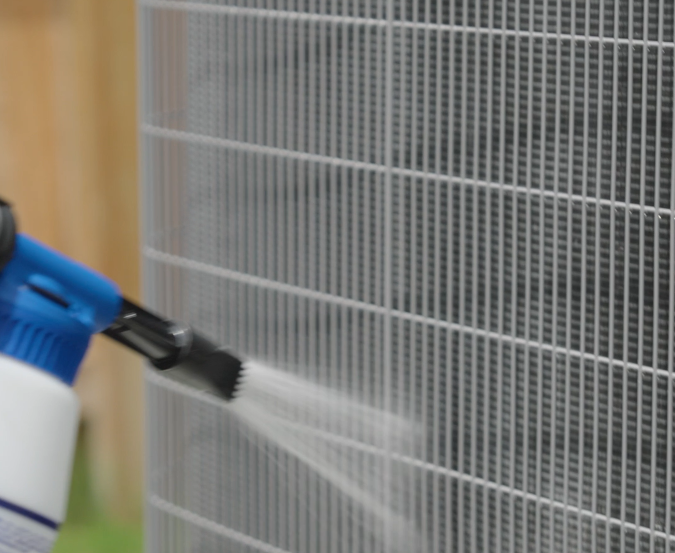
- Shut power off safely, then clean the outdoor coil the right way so fins are not folded over.
- Straighten bent fins when needed.
- Inspect the fan blade for cracks, balance, and clearance.
- Check the condenser fan motor amps, capacitor, and bearings.
- Inspect the compressor for unusual noise, vibration, and overheating signs.
- Check compressor and fan motor amp draws against the nameplate.
- Inspect the outdoor electrical panel, whip, and ground.
- Confirm the pad is level and the cabinet is secure.
- Clear a proper airflow envelope around the unit.
- Inspect refrigerant line insulation and flag damaged sections.
- Look for oil stains that signal a refrigerant leak.
5. Refrigerant and performance testing
- Connect gauges or digital manifolds and measure operating pressures.
- Record suction and liquid temperatures and calculate superheat and/or subcooling the way the manufacturer specifies.
- Compare actual performance to the charging chart for outdoor temperature.
- Check for restrictions at the filter-drier and metering device (TXV or piston).
- If the charge is low, look for the leak instead of just “topping off.”
- Measure supply and return air temperatures and the temperature split across the coil.
- Check static pressure when airflow problems are suspected — a test a lot of cheap “tune-ups” skip.
- Run the system through a full cooling cycle and listen for short cycling, hard starts, or hunting.
6. Restore, document, and explain
- Restore settings toward factory specifications where the equipment allows it.
- Replace access panels and screws so the cabinet seals correctly.
- Record model, serial, readings, and recommendations in writing.
- Walk you through what we found in plain English — not scare tactics.
- Flag parts that survived the summer but are living on borrowed time.
- Review simple homeowner habits: filter schedule, outdoor clearance, and what to do if the drain backs up.
That is a tune-up. If a company is in and out in ten minutes without gauges, a drain flush, or electrical measurements, you did not get a tune-up. You got a visit.
Benefits of an HVAC System Tune-Up After a Brutal Summer
- Fewer breakdowns when you still need cooling. September and October in San Antonio and Austin can still throw 90- and 100-degree days.
- Lower electric bills. Dirty coils, low airflow, and a weak capacitor make the compressor run longer for the same amount of cooling.
- More even comfort and better humidity control. A system that can breathe again actually dehumidifies.
- Longer equipment life. Compressors and motors die from heat and neglect, not from a calendar.
- You protect the manufacturer’s warranty. Many warranties require documented professional maintenance.
- Safer operation. Tight electrical connections, working safety switches, and a clear drain prevent melted wires and flooded ceilings.
- Cleaner indoor air. Filters, coils, and drain pans ignored since spring are full of dust and growth.
- Honest information about replacement timing. If Summer 2026 proved a 16-year-old system is tired, this is the time to get real numbers.
- Priority help if something still fails. Our A/C Tune-Up & No-Breakdown Guarantee is built for this: if the system goes down within 90 days of service, we come back to diagnose at no additional dispatch cost, give you priority scheduling, and credit the original maintenance charge toward the repair.
- Peace of mind before heating season. Most Central Texas homes use the same indoor unit for cooling and heating.
Fall AC Tune-Up Homeowner Mini-Checklist
- Replace the disposable filter now if it is dirty.
- Clear toys, storage, and weeds from around the outdoor unit.
- Make sure attic or closet access to the indoor unit is open and safe.
- Write down unusual noises, rooms that never got comfortable, and any water spots from this summer.
- Note recent electric-bill spikes.
- Secure pets before the technician arrives.
- Do not pour random chemicals down the condensate drain the morning of the appointment.
Why Call Air & Plumbing Today
Air & Plumbing Today was founded in 2012 by Manny and Maira Mallen. We started as a San Antonio air-conditioning company and grew into a full HVAC and plumbing family business serving San Antonio, Lakeway, Austin, and the communities in between. Our promise is simple: the correct service at an honest price. No problema.
- Family-owned and operated since 2012
- Licensed and insured technicians who service most major brands
- Upfront pricing — we only sell you what you need
- Trucks stocked to complete the large majority of repairs on the first visit
- 24/7 live answering and emergency service
- The No Problema Maintenance Plan if you want two visits a year and priority treatment
- Flexible financing through GoodLeap and GreenSky when a repair or replacement is the smarter path
There Is a Special on AC Tune-Ups Right Now
Do not pay full retail if you do not have to. Air & Plumbing Today has a current special on AC system tune-ups listed on our offers page. Check the details, mention the offer when you book, and lock in the visit before the next heat spike or the first cold snap.
See current specials: https://airandplumbingtoday.com/coupons-offers/
Ask about the Mucho Manny fall tune-up deal and about pairing the visit with a whole-home plumbing inspection if that package is running. The coupon must be mentioned when you schedule. Specials cannot be combined and are subject to the terms on the offers page.
Call Air & Plumbing Today for Your Fall AC Tune-Up
Summer 2026 asked more of your air conditioner than most years do. The system that kept your kids asleep and your kitchen livable through weeks of 100-degree heat deserves more than a new filter and a hopeful thermostat click.
San Antonio area: (210) 468-8071
Austin / Lakeway area: (512) 309-5465
Online: airandplumbingtoday.com
Current AC tune-up special: airandplumbingtoday.com/coupons-offers/
24/7 live answering. Emergency service available. Same-day appointments when the schedule allows.
Let my familia help your familia. Call Air & Plumbing Today today and get that AC ready for whatever Central Texas does next.